I, Merlin
| Published 28 Mar 2026 | |
| 6795 words | 31 minutes |
«Ищи́ ве́тра в по́ле: I»
To Look for Wind in a Field: I
Серноводск, Чеченская Республика
Sernovodskoe, Chechen Republic
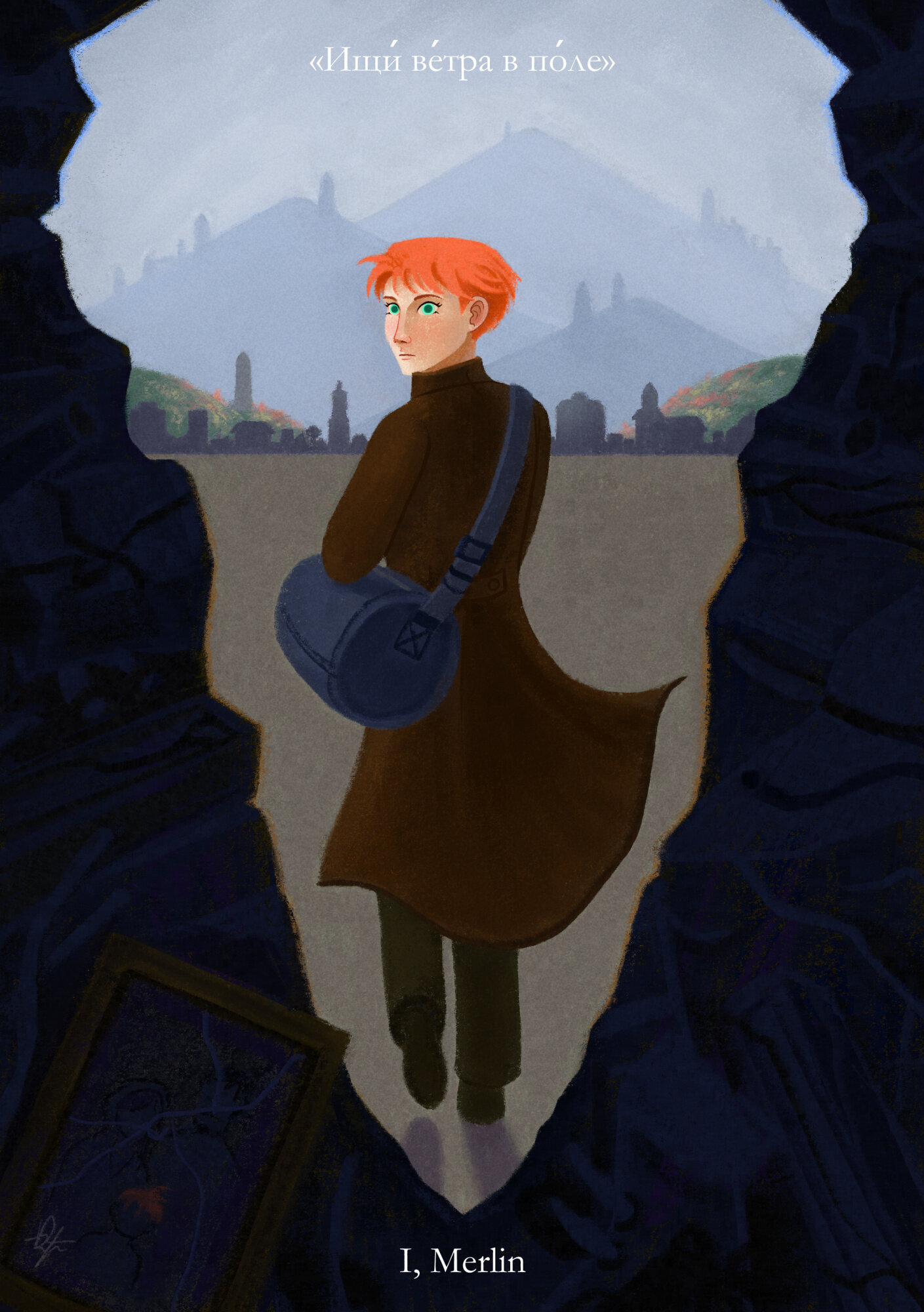
The night the student returned home to his front door left open, everything he had been preparing for his whole life struck him at once. He knew exactly what had happened, and he knew exactly what he must now do.
The student grabbed his family’s worn duffle bag. He searched his mother’s and grandmother’s bedrooms for all their jewellery, their silvers, and their golds. He tossed the heap of it with his family’s emergency cash into the bag then stuffed it beneath his clothes, his toiletries, and his legal documents. It’s what his parents had taught him. It’s what his parents had prepared him for throughout his life. And he was ready.
What they didn’t teach him was to trade a set of clothes for a blanket — he has heard stories of people getting stranded — and to bring his school materials. Being a university student was now the only reason he had for living instead of just surviving — he needed room for his future in the duffle bag. Then he rearranged the whole thing so that he wouldn’t leave any room for regret.
The student took his family’s photo album. The only proof of his family’s existence weighed heavily in his narrow hands. He collected all the photo frames in the house, unfastened them, and slipped their photographs into the album. He forced himself to not look through the pages, forced the album into the bag, forced the bag to zip up, and made a call.
The person on the other end of the line called him lucky. The student hung up. He sat on the floor, hugged his bag to his chest, and waited.
The time came. The student joined seven other passengers and waited by rubble to leave Grozny, the capital of Chechnya — the place all of them will call home for the last time. When the car came, only a few words were exchanged between the driver and the passengers: names and confirmations, with the latter punctuated by a wad of cash shoved into the driver’s hand. But the student’s last-minute call meant he needed to convince the driver even more — he did so with a thicker wad of cash. Satisfied, the driver stepped aside to let the student cram himself into the car with the rest.
It has now been two hours of being driven blindly down dark, uneven roads. Pressed against the window, the student sometimes squinted out whenever a lone street light passed them by, as the car’s headlights were never turned on. He needed to assure himself that they were headed in the right direction, despite having never left Grozny until today.
For the rest of the drive, he relied mostly on sound and touch to make out most of the other passengers. Cradled next to him was a sniffling girl in between a woman and a man. The woman cooed, doing her best to console the girl. The man, in turn, consoled the woman with a strong hand on her shoulder. The four of them sat in the back row of the car. He wasn’t able to make out as much for the passengers in the middle row, but as street lamps illuminated the top of their heads, he guessed it was an entire row of women. All eight of their lives were being steered by the two men at the front. The student knew they were men because he could hear them speak freely — or rather, because no one else dared to speak when the pointed end of a rifle held by the driver’s partner was visible for all to see.
It was not just the rifle that made the student nervous. This situation could turn out to be a trap from the Russians. Or worse, a trap from the Nokhchiy — the Chechens, his own people.
He couldn’t help but scoff at the irony if the latter were true. It was why he was in this car in the first place, after all, and it was why his family had prepared him for this moment. His father’s sister disappeared when he was just a child, and now his mother and grandmother have disappeared just today. The only reason his father escaped this family curse was because he was a man and because he died in a bombing. The only reason the student himself had escaped was because he was studying through the night on campus.
Unless a bomb fell on him right now. Or unless this was a trap. The almost all-female passengers made him nervous. At least he wouldn’t live to see the consequences his aunt, mother, and grandmother faced — if his disguise held to the bitter end.
What would his death be like? He entertained the thought as the car’s engine hummed like the adrenaline in his blood. He needed to stay sharp, and he needed to distract himself.
Finally, the car slowed to a stop. It did nothing to slow his racing heart. And just like how his rushing blood continued to warm his limbs for any burst of action, the car’s engine continued running.
“Out,” the driver barked in Chechen. “We’re here.”
The driver’s partner left the car with his rifle. He cracked the passenger door open. Cool night wind bursted through. The partner stepped aside, waiting for the passengers to leave. But no one moved. They looked at each other with a question on their tongues they were too scared to ask. The woman shielded the little girl. The man next to them put his arm around the woman and looked at the student.
The student understood. This was his duty now.
“Where are we?” he mustered. He glanced ahead at the squat buildings divided by roads. “This is not the border.”
“This is the border,” the driver spat back. “It’s up ahead. You make the rest of the journey on foot.”
“You said you will drive us all the way there.”
“I said I will drive you as far as I can, and this is it,” he pointed towards the buildings. “Keep following the road and you’ll reach the border. You’ll know you’re there when you see the Russian patrols.”
The passengers gasped. One woman choked in fear. The driver shushed her.
The student’s throat tightened. “You didn’t say anything about patrols.”
The driver shrugged. “I just found out about them. Now get out of my car before I change my mind and make you pay for the ride back to Grozny.”
The passengers shuffled out of the car and stood alone at the fringe of this rural town. A woman began sobbing. The girl quietly cried. Everyone else looked at each other, confused and still too scared to speak. The driver called his partner to get back in the car. He didn’t. Despite the rifle slung over his shoulder, he walked to the student gracefully and his voice was soft.
“We’re already outside Sernovodskoe, the closest we can get to the border without being seen,” he pointed at the road ahead that meandered out of the town. “The walk should take less than an hour. When you reach the patrol, stand still and stay silent. Hide until our friends on the other side find you. They will help you cross the border into Ingushetia.”
The small reassurance seemed to calm the passengers a bit, but their nerves remained in the air like static. The student clutched the strap of his duffel bag. “What do they look like?”
The partner shook his head. “I don’t know. But they’re Ingush rebels. They know how to fight if anything happens. But right now, we only have their word that they’ll be there on time.” He patted the student’s back and nodded at the road ahead. “Go. Be fast and lead the others. We’re on time but I don’t know how long the rebels will wait for.”
The student nodded. “Thank you.”
He began to walk ahead, looking over his shoulder at the other passengers to tell them to follow. They did. The car door shut behind them, followed by the rev of its engine.
He did not look behind to see the car disappear into the dark. He pressed on down the dirt road that led out of the Chechen Republic.
—
From the flat terrain, dots of Russian soldiers and military vehicles emerged. It was easy for the passengers to see the soldiers — there were no trees nor tall buildings to provide cover. That meant it was also easy for the soldiers to see the passengers, too. It was only a question of when.
A spotlight shone in the passengers’ direction. They froze.
“Down, down!” the student whispered.
The group dropped to the ground. The spotlight passed over, but the group remained still. They looked at one another, confused and terrified of their possible deaths a few paces away.
“What now?” one hissed. “How are we supposed to go through that? Where are the rebels?”
“They don’t even know if we’re here right now, do they?” another said.
A third cursed. “I should’ve stayed in Grozny.”
The little girl, hidden under the woman’s scarf, tried not to whimper. Next to them, the man began wrapping the girl in the scarf, kneeling to sling her over his shoulder onto his back. The female passengers watched him expectantly. But once again, he looked at the student. Everyone else followed. The student’s mouth opened, dry. He swallowed and steeled his blue-green eyes. This wasn’t the time to sit around. He had made it this far. He was not going to die like this. And he was going to prove that he was man enough, even if the only person who cared was himself.
“I’ll try to find the rebels to let them know we’re here,” he crept up from his crouch. “If you want to follow me, make sure you’re not too close.”
The other passengers nodded. The woman who tended to the child reached forward with trembling hands to hold his.
“May Allah bless you.”
He smiled to accept the wish and to hide his disdain. Then, staying low to the ground, he slunk into the enemy’s territory.
—
The student hid behind the cover of a truck. He could hear the idyllic Russian chatter of the soldiers and the slow crunches of boots on gravel. The soldiers seemed relaxed, unaware, and unprepared for any fight. Why would Russia station soldiers here, away from the tensions between North Ossetia-Alania and Ingushetia?
A sudden yell in Russian snapped him out of his thoughts. He looked at the source: soldiers playing cards on the ground in front of a barrack tent. He sighed in relief, then squinted. By the glowing lamps that lit up the perimeter, he saw the faint shadows of beds and of soldiers lounging around. That must be the sleeping quarters.
He shifted across the truck towards the opposite direction of the soldiers. He dared himself a peek, spotting a makeshift wooden shack away from the tents. Perhaps he could hide there? But what if soldiers were inside? Could he play dumb? He knew his Russian was passable and that he could hide his North Caucasian accent well enough, but there was no one who looked like an Ingush rebel in sight. Was the risk worth it?
He gritted his teeth. His legs grew antsy. God, if only this was better planned out.
He held his breath, ducked, and bolted to the shack. Panting, he pressed himself against its wall that faced away from the soldiers, and looked back at where he came from. He could make out the heads of the other passengers watching him. Or maybe his mind was playing tricks on him.
Onwards. Step after step, he moved down the length of the shack to its edge, his ears primed for noises other than his light breaths or his footsteps. When there was no more length to traverse, he swallowed and peered around the corner of the shack.
He looked straight at a group of soldiers sitting in a circle a few paces away. One stared right into his eyes.
The soldier didn’t react. His eyes calmly passed over the student onto his comrade sitting opposite of him. The student jerked back to the cover of the shack. He couldn’t hear the soldiers’ words, but he could hear a laugh before one of them stood and picked up his rifle. Shit. Shit shit shit shit. The student clenched his teeth and began moving quickly in the other direction. Where’s the shack’s door? Maybe he could hide. He could at least barricade himself? He broke into a run. He dipped around another corner, found the shack’s door, and opened it.
The shack was empty and small. He didn’t hear anyone coming after him. He slipped in and closed the door. It only had a desk, a chair, a radio, some drawers and some chests for supplies — an office of sorts. The student’s eyes darted around. He needed something to barricade the door with. Something light enough for him to move. The chair? He scrambled towards it, grabbed it, and was about to jam it at the door when it opened up to the soldier that spotted him. The student cursed. He held the chair up like a shield, thought for a moment, then dropped it to raise his hands.
“I’m-I’m sorry!” he spoke in fluent Russian. “I know I’m not supposed to be here. I just got curious. I wanted to see what it was like, so I followed you guys. I’m sorry! Please don’t hurt me. I’ll go home now.”
The soldier narrowed his eyes. Shit. Was the student’s accent not good enough? The soldier closed the door behind him and flicked a light switch on. The student filched at the sudden brightness and covered his face. He peered through his fingers at the soldier’s rifle slung across his shoulder, then at his eyes — a cold, deep, unforgiving blue.
The soldier spoke in Russian. “Name?”
“M-Morozov. Please let me go home.”
“Morozov?” the soldier tilted his head. He reached into his pocket, pulled out a slip of paper, and read from it. “Morozov,” he repeated, folding the paper and slipping it back into his pocket. “You’re coming with me.”
“W-what? Wait, I haven’t done anything! Why?”
The soldier grabbed both of Morozov’s wrists to pin behind his back.
“Stop-let go of me-the list! What was that list? Did-did my parents report I was missing? I can go home by myself. Please—”
“Stop talking,” the soldier growled.
Morozov stopped. That language. Fear broke into relief. That language the soldier just spoke — his pronunciation was strange in all the right ways that differentiated Chechen from Ingush. The student saw it now: the Russian military’s coat was easy to find anywhere, and the soldier — the rebel — looked Russian enough.
The student let himself catch his breath. “You’re one of the rebels.”
The rebel nodded. Still pinning Morozov’s hands behind his back, he shoved him forward, leading him out of the shack like a guard would do to a prisoner. His stride was confident, as if he belonged.
“The other refugees,” Morozov whispered in Chechen. “They’re still farther away.”
The rebel paused, confused. Morozov could see him mentally replace Chechen’s foreign pronunciation with one more familiar to him.
“The other refugees are still farther away?” he slowly repeated in Ingush.
Morozov nodded. He was lucky he was from the city — any closer to the countryside and the rebel wouldn’t be able to understand him. Hell, Morozov wouldn’t be able to understand himself.
The rebel nodded again and continued marching. He plucked out a walkie-talkie from his uniform, spoke in it, listened, and hooked it back onto his uniform. “The other rebels on patrol just found them. They’ll go their way. We’ll go ours. We have a truck ahead. We’ll smuggle you and the rest in and drive you to Nazran, the capital.”
“Nazran? Isn’t that next to North Ossetia? Won’t soldiers be there, too?”
“There are soldiers everywhere. But those aren’t the ones who’ll hunt you down if we’re caught.”
“If we’re caught...”
Morozov looked behind at the sleeping quarters, then tried to look behind farther to where the other passengers were—
“Hey, who’s that?”
Morozov tensed up at the new voice. But the rebel’s grip remained steady as he walked the two of them on. “This kid ran away from home to follow us here,” he said in Russian, nodding at Morozov. “I’m sending him back.”
The other soldier laughed. “Ingush boy?”
The rebel shrugged and walked past the soldier.
“Shouldn’t we report that?” the soldier followed the rebel, who waved his hand dismissively.
“He’s just a kid. It’s no big deal.”
The soldier laughed again. “Let him walk himself back. Teach him a lesson.”
“He’s just a kid,” the rebel shook his head. He nodded at the soldier. “We’ll be on our way.”
The soldier waved him off and the two continued their march onwards. Morozov felt lightheaded, then giddy. Maybe it was the heat of adrenaline, maybe it was the need to relieve his nerves, or maybe it was the rugged soldier holding his hands behind his back — Morozov couldn’t help but chuckle. “Very smooth, soldier boy.”
The rebel raised a brow. He stuck to Russian. “Keep moving, kid.”
They walked a few more paces ahead. The soldier from before called out. “Hey, when were you stationed here? I don’t recognise you.”
The rebel waved his hand dismissively again, continuing his march onwards. But he kept listening. A few seconds passed. He looked over his shoulder. The soldier was gone.
He switched to Ingush. “Run.”
The rebel released Morozov and the two ran. Morozov was ahead. The rebel guarded their rear. When he glanced over his shoulder, one hand tugged his rifle’s sling. The other grabbed his walkie-talkie.
“The other Chechens. Did you get them?”
“Yep. We’re with them,” a deep, brassy voice responded. “They said a redhead went ahead. Do you have him?”
“Yes. We may have been caught. All the focus will be on us, so you should be clear.”
“Why are you the first to always get in trouble? We’ll see you at the truck.”
The rebel cracked a smile. “That’s not how you say ‘you’re welcome’.”
“If you live, drinks are on me.”
The rebel pocketed the walkie-talkie and dropped the smile. “Go, Morozov, go.”
Morosov grinned. “If we live, can I get a drink with you guys?”
“Go—”
The rebel’s head snapped to the left. He suddenly grabbed Morozov and pulled him towards another shack.
Morozov sputtered. “What—”
The rebel clamped his hand over Morozov’s mouth. He dragged him to the back of the shack, behind the cover of a truck, and slammed Morozov against the wall. Morozov gasped in shock. The rebel’s body came after. He leaned close on top of Morozov, almost pressing their bodies together. The thin veil of space between them was supported only by the rebel’s hand planted next to Morozov’s head. His azure eyes, illuminated by moonlight, stared into Morozov’s.
He leaned forward. Morozov held his breath. He felt the rebel’s whisper graze his ear.
“Quiet.”
At first, there was only the sound of their breaths against each other. Then fast footsteps kicking gravel about came, louder and louder, followed by Russian orders. The shack’s door on the other side slammed open. Soldiers stormed in. Their search was only for a few seconds. They broke out soon after, slammed the door shut, and continued their search elsewhere.
The rebel kept still. His hand over Morozov’s mouth remained there. He waited a few seconds more, staring at where soldiers could sneak up on them. Meanwhile, Morozov’s eyes had nowhere to go but to the rebel. His senses were sharpened by adrenaline, which stretched the seconds studying the details of the rebel’s face into minutes. His eyes drifted from the rebel’s peach fuzz that traced his jawline, to his cheekbones that shaped his youthful face, to his soft hair that was handsomely cropped, and to his long lashes that sat atop beautiful eyes. From the trapped heat of Morosov’s breaths against the rebel’s palm, he smelled metal and gunpowder. And in the cold, quiet night, he felt the rebel’s warmth against his own skin and heard the rebel’s calm and quiet breaths. He swore he could also feel the rebel’s heart beating against his. Morozov wouldn’t mind staying like this for longer to make sure. He wouldn’t mind staying like this forever.
The rebel eventually lowered his hand from Morozov’s mouth. But he still held him against the shack’s wall: the rebel’s hand had drifted downwards to firmly press against Morosov’s chest. Morozov gasped lightly. He reddened. The rebel didn’t notice. He also didn’t notice the softness beneath his hand, the quickening heart against his touch, or how, despite looking away to search for soldiers, his face was drawing closer and closer to Morozov’s. All Morozov had to do was lean forward and…

“We’re clear,” the rebel mumbled. “Let’s go.”
The rebel pulled back. Morozov remained stunned against the wall, heat rising up the collar of his coat. He never noticed how gentle, yet how rough the rebel’s voice was, especially when he spoke like that. He sounded exactly like the protagonists from the trashy romance novels Morozov secretly indulged in…
“Morozov?” the rebel looked back. “Morozov. Let’s go!”
“I-right, sorry,” Morozov stammered.
The two sprinted away from the camp towards a hidden truck waiting for them. The rebel got into the driver’s seat. Morozov sat behind him. A minute later, the other rebels and passengers arrived. They squeezed in and the truck drove away, fast. The group of rebels relayed information to others through their walkie-talkies and gave orders. The passengers, Morozov included, kept glancing back at the patrol camp shrinking into the distance.
After a few minutes, the truck entered an airport. There were no soldiers here. The truck parked among a row of other identical Russian military trucks. Two civilian cars quickly pulled up next to them. The rebels dispersed the passengers between the two cars, with Morozov following the rebel that rescued her.
The cars quickly drove away under the cover of the night, leaving the truck behind as if it had never left the airport. The rebel that rescued Morozov was at the wheel again. Sat next to him was a second rebel. All was silent until the cars left the airport. That was when the second rebel placed his hand over the driver’s seat, and looked behind at where Morozov and the other passengers sat.
Аэропорт Магас, Ингушетия
Magas Airport, Ingushetia
He grinned. His voice was the same deep, brassy voice Morozov heard through the walkie-talkie.
“You made it. Welcome to Ingushetia!”
The tension in the car broke. The passengers sighed and cried in relief, sinking into the seats. The second rebel laughed, reached for Morozov’s rescuer, and tousled his hair. He loudly rattled on about Ingush rebellion efforts, Nazran’s points of interest, and getting drinks, all while Morozov’s rescuer remained silent and focused on driving. But occasionally, he would look at the rear view mirror to check how the passengers were doing. And every time, without fail, Morozov’s eyes perked up to meet his.
Morozov did not need to see his mouth to know that every time their eyes met, he smiled. It made Morozov’s heart flutter.
After the rebels dropped off their passengers at a refugee camp site, the rebels talked about whose house they were going to take over to celebrate. As they did, Morozov found a tent and dropped off his bag as quickly as possible to join the rebels. Everyone piled back into the car to drive and knock on the door of an older rebel who had his own house and a wife, and who was all right with alcohol. He greeted them at the door with a shake of his head. He never thought their plan was a good idea and had never approved it, but he was glad enough for his ‘dumb youths’ to make it back safely and successfully.
Everyone raised a glass and cheered for the day’s successful operation. They urged Morozov to join them in their toast, and he eagerly did so. He partook in their smiles and chatter, but his eyes never failed to flicker to his rescuer. He sat cross-legged on one corner of a rug, quietly nursing a drink as he watched the commotion from afar. Morozov tried moving towards him but every time he did, someone would step in the way and ask him a question that can only be answered with things Morozov would rather not think about right now. He danced around those questions and once he finally slipped out of conversation, his eyes darted to the corner where his rescuer sat.
It was empty.
Morozov swallowed his disappointment with a drink. He convinced himself that they were bound to meet again. They had to. This group seemed like fun company worth sticking around with, and if he was part of the group, surely they would meet again. Right?
His eyes trailed to the front door.
...I never even got his name.
—
Назрань, Республика Ингушетия
Nazran, Republic of Ingushetia
Leyna Morozov had settled into one of the many refugee tents south of Nazran. Some refugees here were Ingush. Leyna figured they were those who were displaced from the Prigorodny District in North Ossetia-Alania a few years ago, or those who have returned to Ingushetia after the mass deportation of their ancestors, only to find no home to return to. However, the growing majority of refugees were Chechen. They told her so themselves on her first day of settling in, over bread and small pieces of cheese they could afford to spare — an act of the hallmark North Caucasian hospitality Leyna was grateful for.
Some of the Chechen refugees who welcomed her felt that war was looming on the horizon, so it was wiser to move during the calm before the storm. They then talked about how similar the Ingush’s tongue and culture was to theirs, how she can look for jobs, and how she’d have no problem blending in at all. “A young man like you can work at so-and-so and find a wife,” some said at one time. “A young lady like you is old enough to start looking for a husband,” others said at another time.
Leyna was grateful for their advice, but she was set on ignoring them. Ever since she was a child, she had always anticipated something drastic to happen in her life. So she had long made plans for times like these on the slow days she daydreamed under the sun, and had revised them over and over with each sunset she watched. As soon as she caught wind of the Ingush State University opening its doors this month, she knew that it was the perfect place for her plans. She’d take a bus farther south with her documents, enroll herself in their program, and continue her studies. They were a new university — surely they’d accept anyone. As she studied, she’d apply to be a teaching assistant — an English one, to be exact. She was confident in her English skills, and she was confident that very few would be as good as her. If she could, she’d become an official translator. She could translate legal documents and maybe learn from visa applications she’d come across. And after she has earned enough money, she’d get the hell out of this country and flee west to the United States, or to Canada.
So far, everything that has happened roughly fitted the shape of her plans. There was only one variable she did not take into account. Even as she rushed to follow her plans and to find her footing in this new life, she could not forget the azure blue eyes of that rebel who saved her. Nor his strong hands, his gruff voice, or his reserved smile. And when she found herself still thinking of him two weeks later, she knew that he simply must now be part of her plans.
It was a cool September evening when Leyna Morozov strolled down the streets of her new home. She wore a checkered red-and-white headscarf and the same heavy long coat she fled Grozny in. Today was her first day of rest — a quiet Sunday she saved just for herself to stroll around town alone, to take in the sights of the city. It was rare for her to make time to slow her movements and thoughts, even before fleeing Grozny. Her path through downtown Nazran was aimless as she let her melancholic thoughts guide her. And when her thoughts became too much, there were markets to look at, people to watch, and music to listen to…
She lifted her head. It wasn’t just music. It was someone singing, and it sounded like it was coming from an alleyway up ahead.
She followed it, walking past laughing children into a growing crowd of people. They were all around her age — “The youth these days,” her grandmother would call them while shaking her head. Unlike what most of the very traditional people around here would think, it wasn’t like this kind of crowd would cause trouble just because they wore bright synthetics with bizarre patterns, or black leather with blue jeans. If anything, the women in pants were the ones who’d have unwarranted trouble pushed upon them. Why couldn’t people see it was the late 90s? The Berlin wall was gone. So was the USSR and its barriers to the outside world. Why revert back to the time when women her age were taken out of university for marriage? And who wouldn’t be curious about all the new fashion and music that flooded in from the west, like the swinging beat of the song she now recognized as jazz?
Leyna drew closer to the crowd. They swayed to the singer’s voice, smiling and laughing and chatting among themselves with drinks in hand — alcoholic drinks, she determined with a sniff. Out here in public? The locals definitely wouldn’t like that. Maybe this crowd was trouble after all. But with the darkening sky, the tight alleyway, and the crowd snapping to the music, the atmosphere felt like one of those hole-in-a-wall jazz clubs from a dogeared noir novel where the suave detective meets his femme fatale client — and God, it was exactly the kind of escape Leyna needed.
“Leyna! Hey!”
Leyna looked over to the voice that called her. It was Abrek Balabanov, the second rebel who was in the car with her. The last time she saw him was two days after she arrived in Ingushetia. He had offered her a tour of the small region on the night of Leyna’s rescue and came to follow up on his promise.
She waved and squeezed past people towards him. “Hey, Abrek! Nice seeing you here.”
“It’s been a while,” he grinned. “You settling in okay?”
She huffed a sigh but kept her smile. “As well as one could under these circumstances. I am back in university, though!”
“That’s good,” he nodded. “How are your supplies holding up? Do you have enough water, food, and wood? Hey, I can get you a gas stove. I can even get you a big gas tank so you won’t have to keep carrying wood to your tent.”
A polite chuckle. “I will tell you if I ever need one. Thank you, Abrek.”
“I’m just doing what a man should do for a charming young lady like you,” he flashed a smile. “Hey, you should let me know if you need more wood. I’ll cut and carry them for you. I don’t want you to ruin your precious hands.”
The day Abrek met Leyna for the tour was when he found out that she was not just ‘Morozov’ but was also, in fact, ‘Leyna’. It seemed like he was only going to hold on to ‘Leyna’ now. Shame, but it was bound to happen. He wouldn’t be the only one, too. At least she could still be ‘Morozov’ on campus. The thought helped her keep her playful twinkle in her eye.
“I will, Abrek,” she said in a sing-song lilt. “You’re quite the gentleman, aren’t you?”
“You’re quite the bold woman yourself. That’s rare around here. I like that,” he raised his plastic cup of vodka to her. “Drink?”
She declined with a giggle. “Can’t have too much of that with you around. Someone has to keep you in check.”
Abrek laughed. “Can’t blame you. The rest of the boys are here. One of us brought the radio, the rest of us brought drinks, and now we’ve got a crowd. Someone has to keep us in line before the cops show up!”
Leyna paused. “The other rebels are here?”
“Yep. Just my crew, though. The guys who got you and the others across the border.”
Her eyes widened. “So is he..?”
Suddenly, she stopped and listened.
Is that... English?
Leyna’s ears were tugged by the singer’s perfectly mimicked radio-American accent that draped over a familiar voice. She brushed past Abrek, slipped deeper into the crowd, and floated to the front where she could see the show. There was the radio on the floor, the familiar faces of the tipsy rebels, and the singer at the centre of it all.
She gasped. Music was the singer’s trap, and she was ensnared in his melody.
It was him. Her rebel.
“Wait till your charms are right for these arms to surround!
You think you’ve flown before, but baby, you ain’t left the ground!”
The crowd faded away to the peripherals of her vision, parting like curtains for the refugee and the rebel at centre stage.
“A-Wait till you’re locked in my embrace, wait till I draw you near!”
Leyna was tantalised by his performance: the way he swayed as he sang, the empty vodka bottle he held like a microphone, the growl in his croon that matched the radio’s trumpets. His face glowed red as if there was a spotlight on him, and when he opened his eyes, his azure eyes met hers.
“A-Wait till you see that sunshine place—”
The rebel extended a hand to her with a cheeky smile, as if inviting her to dance.
“Ain’t nothin’ like it here!”
Trumpets crackled through the small, dingy radio like tires crunching on gravel. Still, Leyna found her hand drifting towards the rebel — but he spun away to sing the next line.
“The best is yet to come and babe, won’t it be fine?”
Still grinning, he joined the crowd’s snapping and walked in a circle. Leyna felt her cheeks go warm. She tucked her hand back to her chest. But when the next line came, the rebel returned to her with an apologetic yet playful smile on his face.
“The best is yet to come, come the day you’re mine!”
He extended his hand to her again and nodded, assuring her. She took it.
“Come the day you’re mine…”
He led her to the centre as the two swayed to the music. The crowd hollered and cheered.
“...And you’re gonna be mine.”
He twirled Leyna slowly and moved his hand to her back. She followed his cue and leaned backwards into his arm, letting him dip her. The music faded away. The crowd erupted with applause and cheers as the rebel gently leaned Leyna back upright. She could only stare at him, breathless. With a smile and a pat on her back, he sent her back to the crowd and raised a hand.
“Okay. I’m tired. Goodbye.”
The crowd groaned. He ignored them. He removed the CD from the radio, took its case from his denim jacket’s inner pocket, and placed the CD inside.
Abrek pushed his way towards the rebel and grabbed his shoulder. “Oh come on, Gavrill! You practically just got here! You, what, had a few shots, sung a few songs, and now you’re going back already?”
The rebel passed the empty vodka bottle to Abrek. “Yes.”
Abrek frowned. “We finally pulled you out after two weeks and now you’re just leaving? At least have dinner with us!”
“No. Goodbye, Abrek. Goodbye, everyone.”
He turned around and walked away. Leyna stared as he went.
So his name is Gavrill…
Leyna chuckled, the warmth in her cheeks now lighting up her entire face. “What a strange man.”
“Couldn’t have said it any better,” Abrek patted her shoulder. Leyna flinched. A man touching a woman who wasn’t his wife was frowned upon, but no one in this alleyway would likely care. Gavrill did just hold her hand, too. So Abrek left his hand on her shoulder. “Well! The party still goes on with or without him, and he’s almost never here. You should join us for dinner, Leyna. I know the others would love to have you there.”
Leyna’s eyes didn’t move. “Yeah, sure...”
Abrek’s smile faded. He followed her gaze towards Gavrill. He scoffed.
“He’s not worth your time, Ley. He has a reputation with women, and it’s not a good one.” He lowered his voice. “Or should I say, multiple women. He’d sleep with anyone because he has nothing else to do. He’s not giving the Ingush refugees a good rep.”
Leyna finally looked at Abrek. “He’s also a refugee?”
“Yeah. One of the refugees from the Prigorodny District, from two years ago. You know what happened. Right?”
She looked back down the alley. Gavrill had already left. “Yes, I do. Does he live in the refugee camp in the south, perchance?”
Abrek groaned and laughed. He shook his head. “Oh Leyna, Leyna… he’s not just a refugee, you know. He’s an orphan, too. So he has no family, no clan, no house, no land, no money — nothing. He’s always alone so he doesn’t know how to talk to people normally, and you can’t get anything more than a one-night-stand behind a shop from him.”
Leyna laughed. “Calm down, Abrek. I’m not trying to get in his pants. Or in anyone’s pants.”
“I’m just warning you, Ley. I’ve known Gavrill since he was seventeen. He hasn’t changed much since then, and you deserve better!”
“Seventeen? How old are the two of you now?”
“Gavrill just turned nineteen last month. I’m twenty. You?”
“Nineteen…” she smiled softly.
Abrek raised his eyebrow. “Leyna, you can’t be serious. I like a woman who knows what she wants, and I like Gavrill — he’s like a brother to me — but come on. He’s not mature enough for a woman like you. He doesn’t talk. He doesn’t do anything. He might not want to even hook up with you because he still thinks you’re a man.”
Her smile grew. “Really?”
“Yeah, probably,” he grimaced. “He’s not very bright. You can do better. I can introduce you to some good men. Or you can finally grow your hair out and meet some yourself!”
She looked at him and raised a brow. “What do you mean, finally?”
He stared at her as if the answer was obvious. “You’re not in danger anymore, so you can stop pretending to be a boy. Me and the boys, we’ll protect you!” he nodded to his friends before winking at Leyna. “Plus, I think long hair will fit you, too.”
Leyna made a short laugh. “Well. Thank you, but I like my hair short. Who says I’m looking for a man, anyway?” Leyna patted his hand and gently nudged it off her shoulder. “I just want his name, Abrek. That’s all.”
Abrek’s hand dropped. He smiled at her with teeth. “I just told you his name. Gavrill. Gavrill Vorobyev.”
Leyna looked up at Abrek. Her smile turned politely taut. “I want to hear it from him. What’s so wrong about that? Shouldn’t you be rooting for your ‘brother’?”
Abrek’s smile turned sardonic. He downed the vodka in his cup. “I’m just worried you’re expecting too much out of him. Don’t say I didn’t warn you, Leyna.”
“I’ll come to my own conclusions, thank you,” she smiled sweetly and patted his chest twice. She nodded at the crowd. “Well, don’t keep your fans waiting. A gentleman wouldn’t do that, would he?”
Abrek looked back. Some women stood around with drinks in hand, eyeing the young rebel who had recently made waves of news. When Abrek’s eyes met theirs, they waved.
“No. He would not,” he grinned, staring at the women.
Leyna patted his back. “Have fun, Abrek.”
She waved farewell to the other rebels, turned around, and ran after Gavrill with a smile on her face.
—
With heavy feet and a heavier heart, Leyna Morozov dragged herself and her crushed dreams home. Gavrill Vorobyev was nowhere to be seen. He could’ve walked down any of the many streets that the alleyway opened up to. It wasn’t worth trying to look for him now — the sky was darkening overhead, and she didn’t even know where he was going. The only street Leyna could search was the one that led her back home.
If only Abrek hadn’t held her back with his incessant yapping! Leyna took in a sharp breath to calm herself. It was fine. He’ll make up for it by inviting her to something he dragged Gavrill out for. Right? He had to. Leyna had already prepared a hypothetical space in her plans for Gavrill. She had also begun reviewing her mental checklist of requirements for her ideal boyfriend. Husband? Was she thinking too far? Either way, she has to see him again. Just in case.
But that wouldn’t happen until… who knew how long? Leyna sighed. She looked down at the sidewalk and kept walking. At least now she had something else to be sad about.
A few minutes passed. The restaurants down this street had begun to turn on their lights. Leyna lifted her head towards their neon signs, their window panes, and the people sitting on the other side. It’ll be a long, long time before she could eat at one of these places without worrying about making a dent in her savings. She sighed. As she watched the people eat with their family and friends, she also realised that it’ll be a long, long time before she could eat with company like that again. If ever. A bucket of memories in her head tipped and suddenly, the faces and laughter and smiles over warm food with friends she may never see again and family she definitely will never see again rained down on her, soaking her in a cold more bitter than the autumn night, washing over her eyes until the neon signs overhead and the people eating beneath fluorescent lights blurred together like a distant memory.
Fuck. She squeezed her eyes close, breathed in, and walked away quickly down the street until she found a small, empty restaurant. When she did, she kept her head down, walked in, and took a seat. A piece of laminated paper with hard white creases slid into her field of vision. It was the menu. Her eyes landed on a familiar photograph. Fuck it, she’ll get the chepalgash. Any nutritional value it had was negated by its copious amount of butter that could give someone a stroke, but it had homemade cheese and that made her happy. In fact, it was one of three things that could make her happy right here, right now. The second thing would be an entire wheel of cheese. The third thing would be—
The restaurant door opened. Leyna looked up. Her eyes widened.
Ya Allah.
“Gavrill?” she blurted out, loud enough for the man to hear.
Startled, his head snapped to her. But recognition settled in and softened his eyes. “Oh. It’s you.”
Leyna pressed her lips together in a rosy smile. She raised a hand. “Hey.”
He nodded and walked over to her. He was walking over to her!! What were the odds? Wait. Did he live in the same refugee camp as Leyna after all? Was he in this restaurant because it was on the way home for him too?
Without smiling, Gavrill nodded in greeting. The red in his cheeks had yet to fade, but the red in Leyna’s were just beginning. He tilted his head. “How do you know my name?”
Whoops. There went her script of getting his name out of him. Oh well. She was too happy to care. “Abrek told me.” Resting her elbows on the table, Leyna interlaced her fingers and rested her chin on top of them. “I didn’t think I’d run into you here.”
“Do you come here often?”
Leyna’s smile grew at the cliche. She shook her head. “No. It’s my first time.”
“Mm. Thought so.”
“I take it that you come here often, then?”
Gavrill nodded. “It’s cheap. It’s good. And it’s usually empty.”
“I hope you don’t mind me being here, then.”
“Of course not. I don’t own the restaurant.”
Leyna made a soft chuckle until she realised Gavrill was dead serious.
He looked her up and down and continued. “I don’t get to eat with other people often.”
Leyna made a cheeky smile. “Are you saying you want to eat dinner with me?”
Gavrill raised a brow. He tugged the chair across Leyna a bit. “Are you saying you don’t mind me sitting here?”
She paused in thought to calculate. She and Gavrill weren’t married and dating practically didn’t exist in their culture, as much as she loved the idea of it. They’d be scorned for being this physically close to each other in public, even if it was to have a casual dinner together. Clearly Gavrill didn’t care about such traditions, with what he did in the alleyway and with what Abrek claimed he had done. Plus, it wasn’t like the waitress knew about their situation, and it wasn’t like anyone else was here to judge them. So what was he trying to do? Was he being friendly or was he hitting on her? Wait, wouldn’t the waitress recognise him and know—
“If you do, I’ll sit over there,” Gavrill stated plainly, pointing at a table in the far corner.
Whoops. Leyna must’ve paused for longer than she thought. But he did just pass her first requirement. Time will tell, of course, but for now, she smiled again.
“There’s no need to be a stranger,” she patted his side of the table, inviting him to sit. He did so and finally, he smiled, quick and small and warm. Leyna’s heart skipped a beat. She risked following her impulse. “It’s lonely in the corner of the room, isn’t it?”
Gavrill shrugged. “That’s my usual seat. If I eat here, I eat and then I leave.”
“You don’t eat with Abrek?” Leyna asked.
“No. He’s in the army and I work at the airport. We don’t see each other as much as we did when we were younger.” He slid the menu to her. “What do you want to eat?”
Leyna pointed at the picture of her beloved cheese flatbread. “Chepalgash.”
Gavrill tilted his head and leaned forward to see what she was pointing at. “You mean, chapilg?”
“Oh, right. Chapilg,” she mimicked Gavrill’s pronunciation. “Chepalgash is what it’s called in Chechen. I got too excited.”
“So it’s your favourite food.” It was a statement, not a question. Leyna still responded to it with a smile and an eager nod. Gavrill smiled again in return — wider, this time. Leyna too felt her smile grow. She wondered if he noticed that.
Gavrill raised his hand to call the waitress and place the order for one portion. After the waitress left, Leyna giggled.
“Who said I wanted to share?”
Gavrill stared at her bug-eyed. “The chapilg here is huge. I can’t finish one myself.”
By his eyes alone, he went from cool to comical in a second — Leyna couldn’t help but snort and laugh. “I’m joking! I’m joking. I know they’re for sharing. It’s cheaper that way, too.”
Gavrill’s eyes went back to normal. “Do you have a job?”
“Not yet. Hopefully I will have one at the Ingush State University.”
He blinked. “You’re a professor?”
Leyna chuckled at the almost-naive awe in his voice. “I would like to be one, one day! For now, I’m a student. I applied for an English teaching assistant position.”
“English?” he raised his brows and nodded. “So you speak three languages? English, Russian, and… you’re speaking Chechen right now, yes? Your, erm… sounds sound different.”
She smiled, confused. Haven’t they had this conversation two weeks ago? “Yes, you are right. And I am speaking Chechen right now… that’s why I called it chepalgash,” she tapped the menu. “I learned English from my parents. Knowing the language supplemented their jobs — my mom was a medical researcher and my dad was a journalist. They hoped that one day, I could flee west as a student by being fluent in English.”
“Wow. Smart family,” Gavrill nodded. Then, more softly, “I’m sorry for your loss—”
“It’s fine! It happens,” Leyna waved her hand and smiled wider. “So what do you do?”
“Uh…” he stared at her, furrowing his brows, then shrugged. “...I only fix planes.”
Leyna tutted. “You say that as if anyone can fix a plane! Knowing languages and being well read aren’t the only ways to be smart, you know.”
Gavrill chuckled. “I didn’t finish high school, so you’re definitely smarter than me. I learn better on the job, but I don’t even fix or maintain planes a lot. I work with cars and trucks and buses a lot more. There aren’t a lot of flights, and most of the planes sitting there are old Soviet things left behind after the airport stopped being an airbase.”
“Are those planes still being used?”
“No. But no one’s come to scrap them and we don’t have the tools for that. I might as well keep maintaining and flying them to keep them working.”
“You’re a pilot?” Leyna’s eyes sparkled.
Gavrill raised his hands and grinned. “Let’s just say I know how to not crash a plane. Don’t ask me to fly you.”
Leyna laughed. “And is that how you learned English, through working at the airport? Or did you get that job because you know English?”
Gavrill’s blank, bug-eyed stare returned. “What are you talking about?”
Leyna’s smile faded. She stared back in confusion. “...You were singing in English just now.”
“Oh. That. Nah,” he made a sheepish smile — and boy, Leyna liked that cute look on him. “I just copy the sounds I hear. I don’t know what I’m saying at all. I can’t even read the lyrics in the CD case.”
Leyna laughed and smiled sweetly. “Then would you like me to teach you English?”
“Depends. Are you going to charge me?”
Take the chance, Leyna. Take the chance!! “Only with your time and company.”
“Hm,” he leaned forward, rested his chin on his hand, and smiled. “I can do better than that. I can also get you dinner.”
Leyna beamed. YES!!! Her face remained composed and playful. “Oh? But I haven’t taught you anything.”
“You can teach me something right now. How do you say… ‘Can I walk you home after dinner’ in English?”
Leyna never knew she could smile this wide. She had always thought that smooth men who weren’t afraid to smile or flirt openly with a woman only existed in her books, or… anywhere that was not in North Caucasus, really. It was frankly a miracle she found someone like him in the region that was somehow more traditional and conservative than her birthplace.
From the inside of her coat, she pulled out a pen from a pocket. She took a napkin from the restaurant table, clicked her pen, and wrote the sentence in English. When she was done, she turned the napkin to face Gavrill. She pointed at the English words with her pen as she recited them slowly.
“Can I walk you home after dinner?”
Their eyes met. Gavrill smiled. Unlike when he sang, his words carried his Ingush accent. “Can I walk you home after dinner?”
Leyna’s smile grew. So did Gavrill’s.
She chuckled and tapped her pen on the napkin. “Good, but you should look at the words as you’re saying them. You need to know what letters make what sounds.”
Gavrill groaned and laughed. “I can’t read any of this. What are these letters? Can’t you use the normal ones?”
Leyna shook her head and joined his laughter. “No. It looks like we’ll need more lessons together, hm?”
“Tell me when you’re free next, professor.”
Leyna laughed again, her cheeks warm. She clicked her pen and returned it to her coat. “You know, Abrek said you weren’t much of a talker, yet talking with you has been nothing short of pleasant.”
“Ah, thanks,” Gavrill grinned and averted his bashful eyes. “Abrek and his friends talk a lot, so I listen. I like listening. It’s nicer that way.”
“That’s good,” Leyna smiled and nodded. “I was worried about you, you know, that night when all the rebels were talking and drinking, and you were sitting by yourself in a corner. I wanted to talk to you all night, but everyone else kept dragging me into conversations.”
Gavrill froze. His bug-eyed stare returned.
“How do you know this?”
Leyna blinked, still holding her smile. “You… really don’t remember me?”
Gavrill kept staring at her. He lowered his voice. “Did we… hook up before?”
Leyna laughed. Abrek was right about one thing, at least — Gavrill had no idea ‘Leyna’ and ‘Morozov’ were one in the same! She shook her head. “Does the name ‘Morozov’ ring any bells for you?”
Gavrill tilted his head. “...It sounds familiar.”
…Shit. She shouldn’t have brought ‘Morozov’ up. Leyna felt her heart sink. Things were going so well! But it was better to nip her hopes in the bud — if telling him will change the way he acts around her like Abrek did, then he wasn’t worth it! If he found it all weird, she will just leave! It’d be a sign that her plans would work better without him after all!
She steeled herself and began untying her checkered headscarf. When she wore it, her bangs swooped out from beneath and brushed the top of her eyebrows. The illusion it projected played to how women here were expected to have long hair — perhaps the rest of Leyna’s womanly hair was neatly tied into a braid or a bun that hid beneath the drape of her headscarf. But when she removed it, her silhouette changed. The rest of her hair was cropped short, similarly to Gavrill’s and Abrek’s hair. Without her headscarf gently framing the sides of her head, her jaw and cheeks now looked more sharply accentuated. It was also now more obvious how her heavy coat broadened her shoulders and hid her chest well even though, fortunately, there wasn’t much to hide in the first place. For her final touch, Leyna relaxed her throat to deepen her voice and slowed her speech, like she had practised for most of her life.
“How’s this?” he looked up at Gavril with a rosy, yet careful smile. “Do you recognise me now?”
Gavrill stared. His eyes widened. “You’re that refugee. The Morozov kid who kept talking.”
“That’s me,” Leyna said with a cool shrug. The simple gesture dropped his femininity immediately. Before Gavrill could ask, he explained himself. “My late father’s sister was kidnapped when I was small. No one knew where she went, but it was easy to imagine what happened to her. He was paranoid over losing me ever since, so I was a girl at home and a boy outside. It never bothered me. It’s actually natural to me. I never feel like I’m swapping between being a girl and a boy even though that’s what it looks like on the outside. Being both makes me whole because both are a part of me.”
A moment of silence passed. Gavrill kept staring. It bothered Leyna. He clutched his headscarf beneath the table and was ready to tie it over her head again.
Until he realised how intently Gavrill was listening to him. Gavrill’s eyes were the same as that night at the border — alert and focused. Leyna could see how Gavrill was internalising everything, weighing each word Leyna articulated, and taking his time to fully understand what he heard like a student.
“So if your father never raised you as a boy,” Gavrill finally started, speaking slowly and curiously, “would you still be like this?”
Leyna’s brain blanked. He wasn’t used to not being brushed off.
“Um… yes, I think so,” his slow nod grew more certain. “Yes. Had I been raised differently, it may have taken me longer to figure… this out, but I think I’ll still be the same.”
Gavrill smiled. “No wonder you looked familiar. Guess that’s why I took your hand while I was singing.”
Leyna’s smile warmed, but his heart kept racing. Was Gavrill just being polite right now? Was his smile more reserved than before? Leyna really, really wanted Gavrill to like him, but would Gavrill be able to tolerate all this? Would he be able to tolerate it when he demanded a simple, clear-cut, black-and-white answer for the mush Leyna simply was? She couldn’t even explain why she was this way, nor did she ever choose to be this way. If it was up to her, she’d choose either girl or boy and avoid all this complicated bullshit and be happy. Why did she have to be this way? This was stupid. Why did she even try—
“Is Morozov your first name or your last name?” Gavrill asked.
“Ah—” Leyna stammered, “Last name. Sometimes I go by ‘Morozov’ because it’s, uh, easier, but it’s my surname.” A pause. “My first name is Leyna. I’m Leyna Morozov.”
“Leyna Morozov,” Gavrill nodded. “You talk a lot.”
Leyna clutched his headscarf tighter and shrunk in his seat. “...Sorry.”
Gavrill shook his head. “You talk a lot, but they’re all about interesting things. Things I’ve never heard of before. I like it.”
Leyna looked up at Gavrill’s earnest eyes. I like you echoed in his head. Hope calmed his heart and loosened his grip on his headscarf. “Well, thank you. I guess.”
“Don’t be shy. It’s nice to listen to a different perspective. I think you’ll get the teaching assistant job because you really are a teacher.”
“What makes you say that?”
Gavrill tilted his head and smiled. “I want to learn more from you. I want to learn more about you. So, Leyna Morozov…”
He made a show out of taking the napkin Leyna wrote on and read from it.
“Can I walk you home after dinner?”
Leyna’s eyes widened. She blushed. “People will stare at us.”
Still smiling, Gavrill crossed his arms and leaned against the table. “What’s wrong with two men walking home together?”
Leyna’s face lit up. Whether Gavrill invited him out of friendship or out of something more didn’t matter. Leyna nodded, warm with a joy she never never knew could exist, and the waitress served the two their chepalgash.
—
DECEMBER 1994. 3 MONTHS LATER.
GROZNY, CHECHENYA IS INVADED BY RUSSIAN FORCES. INFANTRY UNITS ORGANISED AT CHECHEN BORDERS ARE MOBILISED TO ADVANCE TOWARDS THE CAPITAL CITY. SHELLINGS AND BOMBINGS THIS MONTH LEFT SEVERAL THOUSAND DEAD. IN A MONTH, AN ESTIMATE OF 18,000 WILL BE KILLED. IN TWO MONTHS, THE RUSSIAN ARMY WILL CAPTURE GROZNY.
THE FIRST BATTLE OF GROZNY SPARKED THE FIRST CHECHEN WAR. INGUSH REBELS LENT THEIR AID TO THE CHECHENS IN THEIR FIGHT FOR INDEPENDENCE AGAINST THE RUSSIAN FEDERATION. AMONG THE REBELS WERE ABREK BALABANOV AND GAVRILL VOROBYEV.
LEYNA MOROZOV CONTINUED HER DUTIES AS A STUDENT AT THE INGUSH STATE UNIVERSITY. SHE ALSO CONTINUED WORKED AS AN ENGLISH TEACHING ASSISTANT AND AS GAVRILL VOROBYEV’S ENGLISH TUTOR.
—
To be continued next week
Thank you to my Ko-Fi members for supporting the Flight!